Chimney problems to watch for in Woodmont and Walnut Beach
Salt air, nor'easters, and 1920s brick make Woodmont and Walnut Beach chimneys fail differently than the rest of Milford. Here's what to watch for.
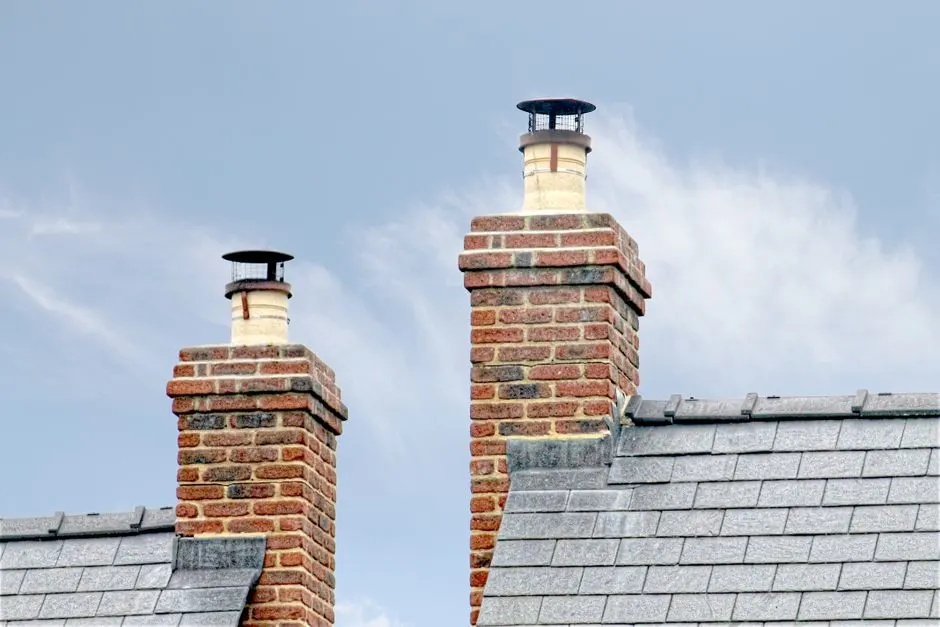
The chimney problems to watch for in Woodmont and Walnut Beach, Milford Connecticut come down to three things: salt air eating metal, wind-driven rain attacking masonry, and century-old brick that has already absorbed decades of both. If your chimney is on a beach-block house built between 1900 and 1950, assume the crown, flashing, and mortar joints are the weak points - not the flue. Everything below walks through what we actually find on roofs in these two neighborhoods, what it costs to fix in 2026, and the warning signs that mean you should stop burning until someone looks at it.
Why Woodmont and Walnut Beach chimneys fail differently
Woodmont and Walnut Beach sit closer to Long Island Sound than almost anywhere else in Milford, and that salt-heavy air changes the failure timeline on a chimney. Metal components - caps, dampers, chase covers, and the top of a stainless liner - rust from the outside in. Masonry absorbs airborne salt, holds moisture longer, and spalls during the first hard freeze.
We see this on streets like Beach Avenue and Anderson Avenue where the wind comes off the water unobstructed. A chimney two miles inland in Devon might go fifteen years before a cap rusts through. On the beach blocks, we're replacing them in seven to nine. That's not a sales pitch - it's what the rust patterns tell us when we pull a cap off.
Add the freeze-thaw cycle. Milford averages around 120 freeze-thaw days a year, and a saturated brick can cycle through that twenty or thirty times in a single winter. Water gets in, freezes, expands about 9 percent, and pops the face off the brick. Once the face is gone, the brick behind it is exposed and the process accelerates.
What chimney problems are common in Woodmont Milford CT?
In Woodmont, the four problems we fix most often are cracked crowns, failed flashing, spalled brick above the roofline, and rusted caps on older metal chimneys. The neighborhood's housing stock is the reason. Most of these homes were built with solid brick chimneys that have never had a crown replaced, and the original mortar was a soft lime mix that erodes faster than modern Type N or Type S.
Here's what we typically find on a first inspection in Woodmont:
- Crown cracks - hairline to quarter-inch, usually radiating from the flue. Water runs straight down the flue and into the attic.
- Flashing failure - the step flashing and counterflashing have pulled away from the brick as the mortar behind them eroded.
- Spalling faces - the bottom three to five courses above the roofline take the worst of it because that's where splash-back lands.
- Rusted caps and dampers - salt air plus a single season of neglect equals a cap that's more rust than steel.
None of these are exotic. They're the predictable result of a 1920s chimney living in a coastal microclimate. When we quote chimney crown repair in Milford, Connecticut, we're usually replacing a crown that has already been patched once with mortar that wasn't rated for the exposure.
Why does my chimney leak in Woodmont Milford?
A chimney leak in Woodmont almost always traces back to one of four entry points: the crown, the flashing, the brick itself, or the cap. Water doesn't need a hole. It needs a path, and a cracked crown gives it a direct one down the flue.
Diagnosing it is a matter of elimination. We start at the top and work down:
- Crown. Look for cracks wider than a credit card. If the crown is flat or sloped toward the flue instead of away, it's pooling water by design.
- Flashing. Check where the roof meets the chimney. Lifted, rusted, or tar-patched flashing is a leak waiting for the next nor'easter.
- Brick and mortar. Tap the brick above the roofline. A hollow sound means the face has separated from the core.
- Cap. A missing or undersized cap lets rain fall straight into the flue. That's the cheapest fix and the most common miss.
If you're seeing a brown stain on the ceiling below the chimney after a heavy rain, that's usually the crown or flashing. If the stain shows up during a light drizzle, suspect the brick itself. We handle all four under chimney leak repair in Milford, Connecticut, and we pressure-test the repair before we close out the job.
How do I spot chimney issues in Walnut Beach Connecticut?
In Walnut Beach, the fastest way to spot a chimney problem is to stand across the street with binoculars after a rain and look for dark streaks on the brick below the crown. Those streaks are the chimney telling you where water is getting in. The neighborhood's mix of cottages, capes, and converted summer homes means we see more prefab and metal chimneys here than in Woodmont, and those fail differently.
Metal chimneys rust from the inside out at the seams and at the storm collar. By the time you see rust on the outside, the inner wall has been compromised for a season or two. On a metal chimney, look for:
- Orange or white streaking below the cap or at the pipe joints.
- A storm collar that has pulled away from the pipe.
- Any soft spot or pinhole in the pipe itself.
On the masonry cottages closer to the beach, the pattern is the same as Woodmont but faster. A chimney that would last thirty years in Orange might need repointing at eighteen here. That's the trade-off of living four blocks from the water.
Chimney masonry problems Woodmont Connecticut homeowners miss
Chimney masonry problems Woodmont Connecticut homeowners miss are almost always the ones happening above the roofline, where nobody looks. The brick at eye level from the driveway is usually fine. The brick in the top ten courses - the part that takes the wind, the rain, and the freeze - is where the damage lives.
Three specific things to check each fall:
Mortar joints. Run a screwdriver along a joint. If the mortar crumbles or the tip sinks in more than a quarter inch, the joint is gone. Repointing a chimney at this stage runs $1,200 to $2,800 in 2026 depending on height and access. Waiting until the brick itself starts moving turns that into a rebuild.
Spalling faces. Look for brick where the flat face has popped off, leaving a rough, shaley surface. That's freeze-thaw damage, and it spreads. Once three or four bricks in a course are spalled, the ones around them are on borrowed time.
Efflorescence. That white, chalky powder on the brick is salt pushed out by moisture moving through the masonry. It's not damage by itself, but it's a reliable indicator that the chimney is staying wet. A breathable siloxane sealer stops the water without trapping vapor - that's what chimney waterproofing in Milford, Connecticut is for, and it buys you years on a chimney you'd otherwise be rebuilding.
If the damage has already gone past repointing - if the brick is cracked through, the chimney is leaning, or the flue tiles are broken - that's a different conversation. We do full chimney masonry repair in Milford, Connecticut for exactly that situation, and we'll tell you honestly whether a rebuild makes more sense than a patch.
What to watch out for in Walnut Beach
The most common mistake we see in Walnut Beach is patching a leak from the ground instead of fixing the source. A tube of roof cement smeared around the flashing will get you through one storm. It won't get you through a winter, and it makes the eventual repair harder because we have to remove all of it before we can see what's actually wrong.
The second mistake is ignoring a chimney because the fireplace isn't used. A chimney that hasn't had a fire in ten years still takes on water, still freezes, and still spalls. Unused chimneys are often in worse shape than active ones because nobody's looking at them.
The third is skipping the cap. A proper stainless cap with a mesh spark arrestor runs $350 to $900 installed in 2026 depending on size and whether it's custom. That's the single cheapest thing you can do to keep water, birds, and squirrels out of the flue. We install them as part of chimney cap repair in Milford, Connecticut, and on a beach-block chimney it's the first thing I'd spend money on.
When to call a professional
Call us when you see any of the following: a crack in the crown wider than a quarter inch, a ceiling stain that reappears after every rain, spalled brick in the top ten courses, a chimney that moves when you push on it, or a flue liner with visible cracks or gaps at the joints. Those are the conditions that turn a $600 repair into a $9,000 rebuild if you wait a season.
We also want to hear from you if you smell smoke in the attic, if the fireplace backdrafts when you open the damper, or if you've had a chimney fire - even a small one. A chimney fire can crack flue tiles without leaving any visible damage from the roof, and the only way to know is a camera inspection.
Our team runs chimney inspection service in Milford, Connecticut with a camera and a moisture meter, and we tell you what we find before we quote anything. If it's a $200 fix, we'll say so.
Frequently Asked Questions
What chimney problems are common in Woodmont Milford CT?
Cracked crowns, failed flashing, spalled brick above the roofline, and rusted caps. Woodmont's 1900-1950 brick chimneys plus salt air from the Sound make those four the most frequent calls we run. Most are visible from the ground with binoculars after a rain.
How do I spot chimney issues in Walnut Beach Connecticut?
Look for dark streaks on the brick below the crown, rust at the seams of metal chimneys, and a storm collar that has pulled away from the pipe. Check after a heavy rain - that's when the evidence shows up. Any of those three means it's time for an inspection.
Why does my chimney leak in Woodmont Milford?
Water gets in through the crown, the flashing, the brick, or a missing cap - in that order of likelihood. A crack wider than a quarter inch in the crown is the usual culprit. We trace it top-down and fix the source, not the stain.
Who fixes chimney problems in Walnut Beach Milford CT?
We do. Wire Neo handles chimney repair, masonry, relining, caps, and leak diagnosis across Walnut Beach, Woodmont, and the rest of Milford. Call (844) 796-3584 and we'll get someone on the roof this week.
How often should a coastal chimney be inspected?
Once a year in Woodmont and Walnut Beach, ideally in early fall before the burning season. Inland Milford chimneys can stretch to eighteen months. Salt air and freeze-thaw cycles simply move faster here than they do two miles from the water.
Get help with Chimney repair in Milford
If you've spotted any of the warning signs above - a cracked crown, a ceiling stain, spalled brick, or a cap that's more rust than metal - don't wait for the next nor'easter to make it worse. We work Woodmont and Walnut Beach roofs year-round and we know what these chimneys look like from the top down.
Call Wire Neo at (844) 796-3584 and we'll schedule an inspection, show you photos of what we find, and give you a straight number before any work starts.